A Trip to Glenstone and the Physicality of Art
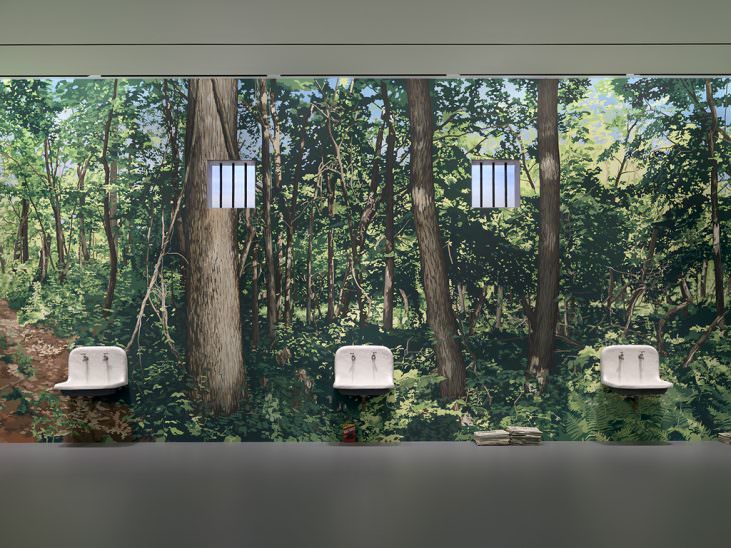
Picture this, you're standing in a forest and you hear the sound of running water. Except it's not a forest. And the running water is coming from sinks that are turned on and on the brink of overflowing. The forest is painted on the walls. And the windows have bars on them. The floor is littered with newspapers and headlines that read anywhere from gender politics, racial injustices, and advertisements for laundry soap. On a few there is a headline about lead in the city's water. So what do you even read first?
This immersive experience can be found at Glenstone, a museum that offers exhibits that you can step into literally. This particular exhibit is found in one of their Pavilion rooms. The untitled piece by Robert Grober is set up to form a full, multi-sensory experience that makes you ponder long after you step out of it.
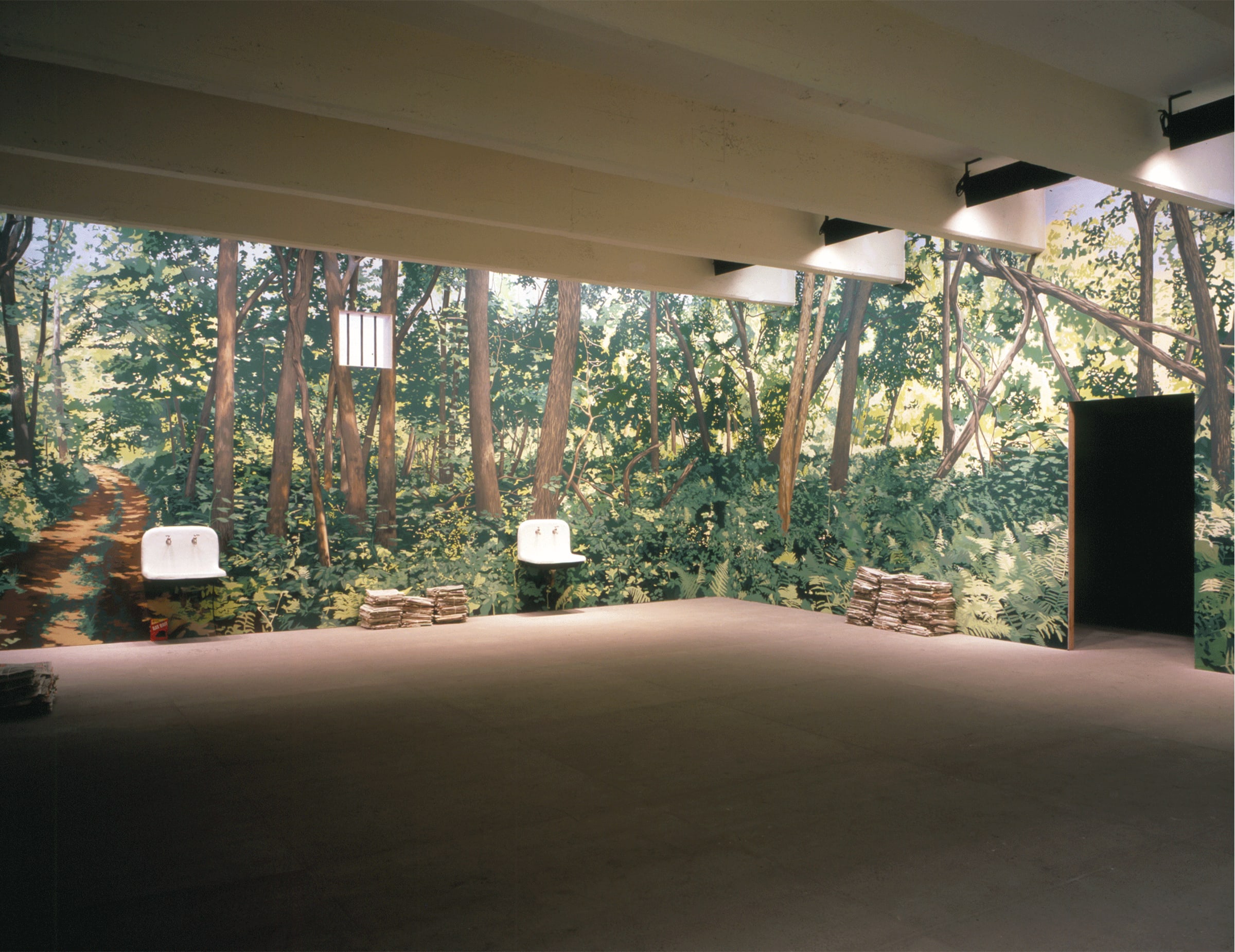
When visiting this particular exhibit and standing in the room, there are so many feelings that come rushing forward. For one thing, the headlines and newspapers are juxtaposed with real-world events and then with copious amounts of advertisements for products. There is an influx of information at your feet. These headlines are underscored by the occasional, "City Water Contaminated with Lead!" And there is an imminent danger under all of the other information and news stories. The other news stories range from abortion access to LGBTQ+ rights to stories about racial protests. And in the midst of it, you're standing in a room that's seemingly serene.
The walls convey serenity in shades of green and in a nature scene that you'd like to walk into. And the auditory part of the multi-sensory experience comes from the running water. Your brain is tricked into the serenity, just as you remember the headlines that told of the lead that was contaminating the water. You're put in this position of wanting to admire the art, but the sense of danger lurks underneath.
The exhibit conveys a feeling that's all too familiar to what we experience on the day-to-day. We are so saturated in media. There is always so much to take in. Some is devastating while the next swipe on your feed can be an ad for some product. And it is confusing. To be in a state of unrest through human rights crises that unfold every day and have advertisements flung at us really puts our brains in a state of discourse. It's what I felt standing in the exhibit. The room itself was powerful, and it took up a large space itself. The fact you could walk in and be immersed in it added to the overall feel. Our brains have to process so much at such a rapid rate. And with so many humanitarian crises occurring at once, it really makes you stop and think, "why do I even care about the advertisements?" It feels very dystopian.
The rest of Glenstone includes many other installations that really make you think. Including clay houses by Andy Goldsworthy that are designed to fall apart over time. he purposely did not fire the clay, because he wanted them to change over time. So much of art in museums is designed to be permanent, so it was so interesting to get to see something that flipped it on its head.
The museum itself is self-described as being a place "that integrates art, architecture, and nature into a serene, and contemplative environment." There are not only indoor exhibits, but a sprawling landscape that makes you feel so small in the best way. You can walk through the woods and listen to the stream, or stare into reflecting pools. The whole place is designed to get you in your head in the best way.
You can visit for free too! I highly recommend going.


Comments
Post a Comment